2025
Entries

Nowadays accidents might occur because of varied reasons; the foremost reason is equipment failure and is happened due to improper maintenance of the products. To prevent these abnormal situations and to protect one's life from these accidents, there's a necessity for watching of braking system in cars. Special safety options are engineered into vehicles occupants solely,

Some 1 in 3 Americans have pre-diabetes, yet the vast majority (80%) don’t know it. Blood tests are performed too late, require specialist staff, and performed only by healthcare providers. The cost of allowing pre-diabetes to go undetected is that $1 of every $4 in US healthcare costs is spent on diabetes care.

NanoTrap™ is a deployable, airborne particulate-binding agent designed to improve sensor accuracy in Industrial Internet of Things (IIoT) environments. Unlike traditional filtration or ventilation systems, NanoTrap™ does not require power, fans, filters, or structural integration. It is applied as a fine mist directly into the surrounding air,

My Idea is for an air-powered hybrid transportation drivetrain utilizing a small diesel powered gas-turbine engine to compress air and provide range-extension. the gas turbine should be sized to provide a real-time air supply to a reciprocating piston air engine, actuated by air-powered rotary valves.
When vehicle idles down, stops or brakes,

This innovation introduces a Hybrid Transmission System (the System) that goes beyond conventional mild hybrid configurations. While typical setups manage only torque from the internal combustion engine (ICE) and electric machine (EM), this System enables precise control of both torque and RPM, placing the hybrid set consistently near its maximum efficiency range and avoiding high-emission operating zones.

The X650 Thermal Drone is a next-generation aerial system built for real-time thermal imaging, inspections, and search missions. Unlike most commercial drones that are locked into proprietary systems, the X650 features a fully modular, open-platform design, supporting third-party thermal cameras, HD video systems, and onboard processing.

As the first AI-enabled picosatellite (PicoSat) constellation platform, IQSat is engineered to facilitate the successful implementation of edge AI in space, with AI processing on the satellite itself, proving the platform’s ability to reduce latency,
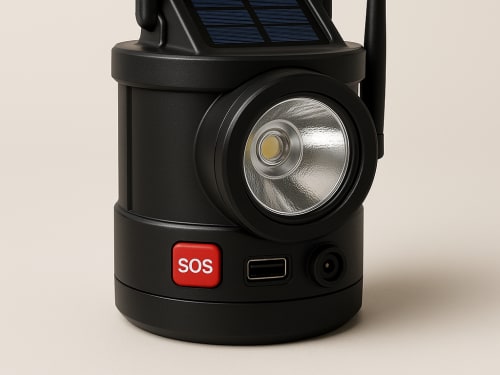
For the Light is a dual-purpose system designed to improve energy access and enhance disaster response in vulnerable coastal communities. It combines a solar-powered lighting unit with a GSM-GPS-enabled emergency alert device, offering both daily utility and life-saving functionality. The design addresses two critical problems: (1) lack of reliable electricity in remote areas,

Long COVID is estimated to affect more than 17 million Americans. The UK has a BioBank program that collects massive amounts of data on post COVID cognitive dysfunction. Their data suggests that patients with even mild COVID had a greater decline in executive function,

Many times it is observed that motor drivers, trucks, buses, auto and two wheel drivers ignore the red signals and other traffic rules. As a results accidents can occurs every day.
Page 35 of 44