Congratulations to Our 2025 Grand Prize and First Place Winners!
Imersiv, a breakthrough technology that improves audio performance by 100X compared to today’s very best audio equipment for applications ranging from sound engineering to space missions to medical imaging, was named the $25,000 grand prize winner at a live finalist round held November 7 in New York. Click here for the full list of winners. Also see the Top 100 highest scoring entries. Special thanks to our esteemed panel of judges.
Help build a better tomorrow
Since Tech Briefs magazine launched the Create the Future Design contest in 2002 to recognize and reward engineering innovation, over 16,000 design ideas have been submitted by engineers, students, and entrepreneurs in more than 100 countries. Join the innovators who dared to dream big by entering your ideas in our 2026 contest opening March 1.
Read About All the 2024 Winning Inventions
Special Report spotlights the eight amazing winners in 2024 as well as honorable mentions in each category, plus the top ten most popular entries as voted by our community.
Click here to read moreA ‘Create the Future’ Winner Featured on ‘Here’s an Idea’
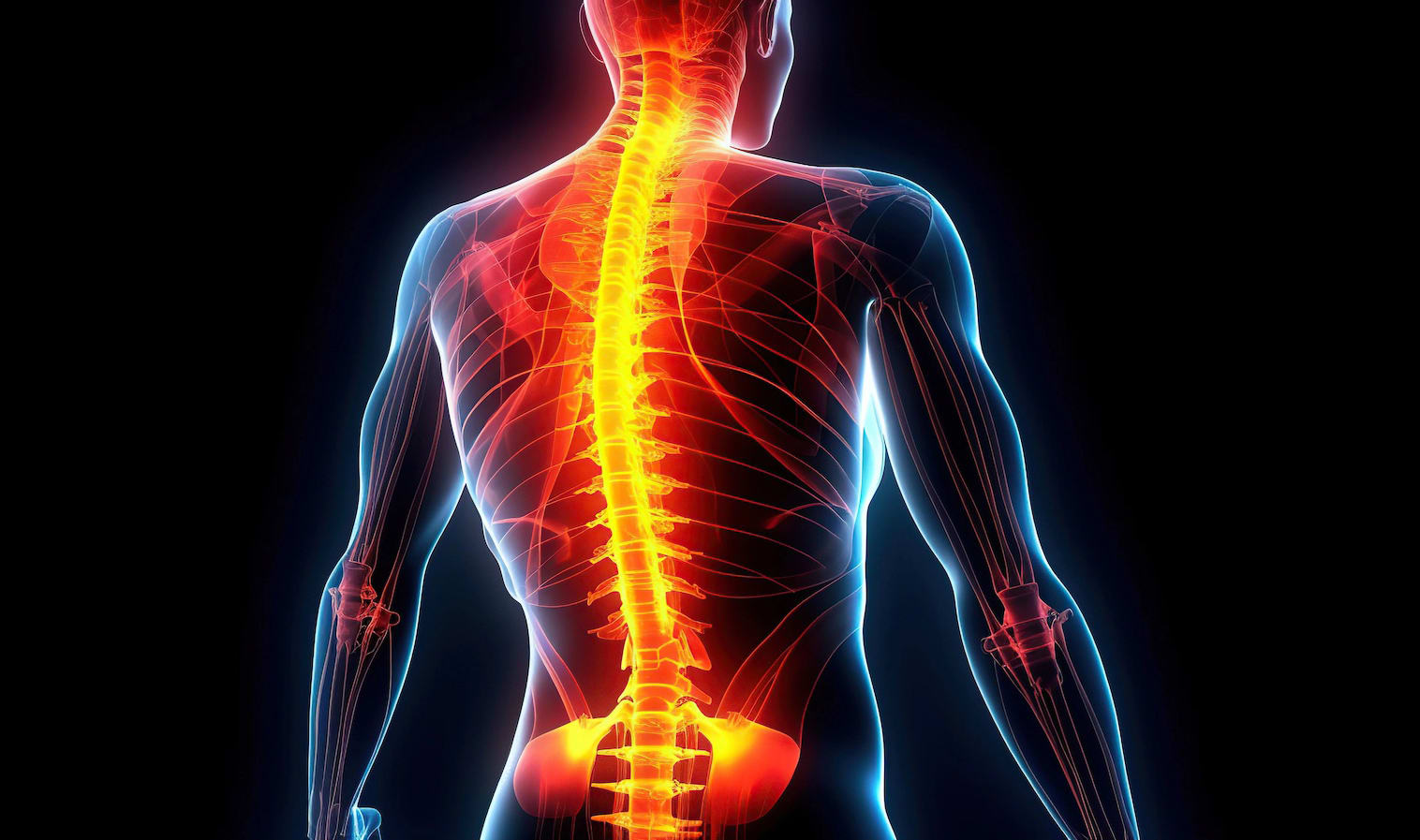
Spinal cord injury affects 17,000 Americans and 700,000 people worldwide each year. A research team at NeuroPair, Inc. won the Grand Prize in the 2023 Create the Future Design Contest for a revolutionary approach to spinal cord repair. In this Here’s an Idea podcast episode, Dr. Johannes Dapprich, NeuroPair’s CEO and founder, discusses their groundbreaking approach that addresses a critical need in the medical field, offering a fast and minimally invasive solution to a long-standing problem.
Listen nowThank you from our Sponsors
“At COMSOL, we are very excited to recognize innovators and their important work this year. We are grateful for the opportunity to support the Create the Future Design Contest, which is an excellent platform for designers to showcase their ideas and products in front of a worldwide audience. Best of luck to all participants!”
— Bernt Nilsson, Senior Vice President of Marketing, COMSOL, Inc.
“From our beginnings, Mouser has supported engineers, innovators and students. We are proud of our longstanding support for the Create the Future Design Contest and the many innovations it has inspired.”
— Kevin Hess, Senior Vice President of Marketing, Mouser Electronics
contest
Contest

This is the interdisciplinary, multidisciplinary approach to solving a much larger problem, a paradox of scientific theory and observation. The paradox is classical electromagnetics and thermodynamics versus quantum theory (mechanics). Is radio frequency to microwave radiation acting on diazoluminomelanin reactions as time-varying fields, through secondary heating, or as quanta being specifically absorbed?

EduBot is an affordable, AI-powered learning robot that delivers personalized education to students in low-income or rural communities without internet access.
It acts like a mini teacher, understanding each student’s learning pace and customizing lessons in subjects like math, science, and language.
Built using offline AI models, a touchscreen or voice interface, and solar charging,
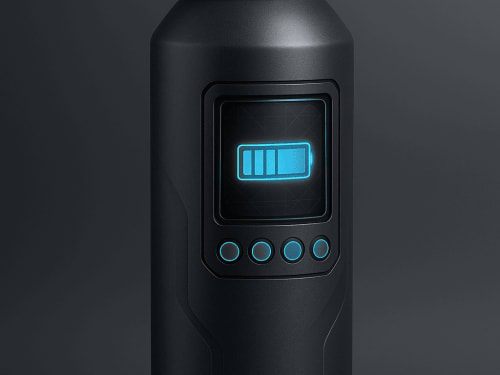
Conventional aerosol cans are disposable, gas-propelled, and pose significant environmental and safety concerns. They typically contain around 70% liquefied gas and only 30% active product. The gas is flammable, pressurized, and can be harmful to both users and the atmosphere. Our innovation introduces a refillable, propellant-free spray system that ensures users pay only for the actual product,
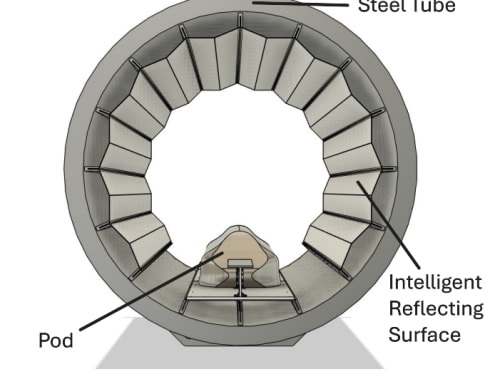
The proposed solution addresses a fundamental challenge for Hyperloop systems: maintaining reliable, high-speed wireless communication inside vacuum-sealed steel tubes. External wireless signals are completely blocked in these environments, isolating the pod from outside networks. This isolation poses risks to operational safety, passenger experience, and system automation, especially as pods travel at speeds exceeding 1,000 km/h,

On paper, power towers look great. So why are they shutting down?
One reason is current solar power tower heliostat fields are limited to 1500°F maximum because of flat heliostats. This new adaptive optic heliostat innovation creates higher temperatures 2500°F, which now allows for greater industrial applications, such as using the sun to manufacture cement, steel, fuel,

Current methods for in-situ planetary surface exploration — whether on the Moon, Mars, or beyond — still rely primarily on single, high-cost platforms such as rovers and landers. Rovers, while mobile, are constrained by limited power and the need to avoid hazards, resulting in extremely slow movement (typically a few centimeters per second). As a result,
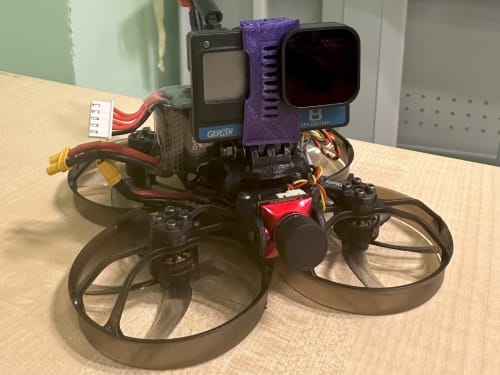
Current autonomous drones for aerial sensing are often costly, heavy (typically over 500 g), and require licensed pilots under aviation regulations. This restricts their use for education, research, and small-scale field applications. LiSA UAV addresses this by offering a lightweight (d on a compact 2.5-inch cinewhoop carbon fiber frame. It supports multiple autonomous modes, including Loiter,

A proper diet plays a vital role in maintaining health, and its importance varies significantly based on an individual's body condition. Each person has unique nutritional requirements depending on their age, gender, body weight, metabolic rate, physical activity level, and any underlying health conditions. It is very important to maintain a proper guide to help manage our nutritional requirements.

Turn on intelligence-AI energy monitor that thinks for you.
The AI-Based Energy Monitor & Controller is an intelligent, all-in-one energy management system designed to address modern challenges in energy efficiency, safety, and sustainability. By leveraging artificial intelligence and automation, this solution goes far beyond traditional energy monitors, offering users real-time insights, smart control,
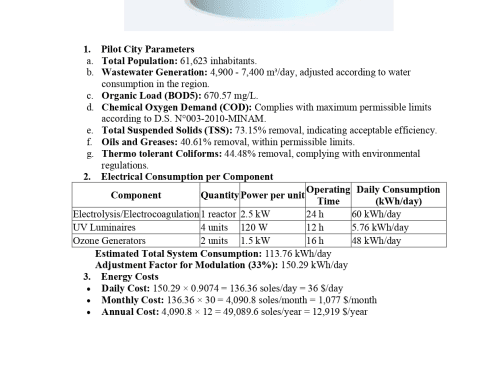
Main Components:
Wastewater Inlet/Outlet: Represents the entry and exit points of the water.
Pre-Treatment: An initial stage to remove larger solids or prepare the water for the main reactor.
Electrochemical Reactor: The core of the system, where electrochemical processes (including the graphite electrodes and stainless steel meshes from the previous diagram) occur to treat the wastewater.
Page 4 of 1029