2025
Entries

This project presents the design of an ultra-low-power, hybrid-powered IoT sensor node tailored for deployment in remote and biodiverse regions such as the Amazon rainforest. The node integrates a solar panel, Li-ion battery, and power multiplexer (TPS2110A) to dynamically manage power sources with seamless switching, ensuring continuous operation even under fluctuating environmental conditions.

This innovation introduces a Hybrid Transmission System (the System) that goes beyond conventional mild hybrid configurations. While typical setups manage only torque from the internal combustion engine (ICE) and electric machine (EM), this System enables precise control of both torque and RPM, placing the hybrid set consistently near its maximum efficiency range and avoiding high-emission operating zones.


Overview
This pioneering passenger car integrates a hydrogen-powered internal combustion engine (H2-ICE) with a mechanical kinetic energy recovery system (KERS), delivering a sustainable alternative to battery-electric vehicles (BEVs). The design addresses BEV limitations, including resource-intensive battery production, grid decarbonization dependency, and the environmental toll of frequent vehicle replacement.
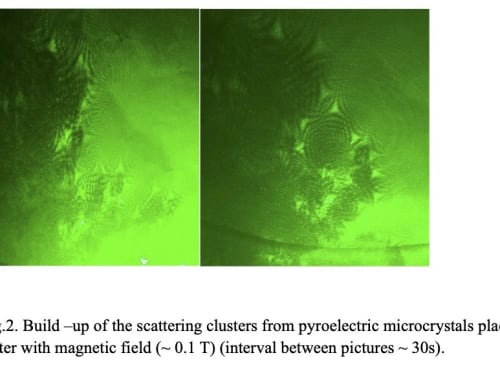
Hydrogen Generation by DC/ Pulsed Electrolysis with Smart Materials Enhanced by Magnetic Field.
N. Kukhtarev, T.Kukhtareva, 2247 Fargo St. Los Angeles
There is worldwide need for environmental-friendly affordable sources of energy. Hydrogen is attractive candidate for an energy source that can be produced by electrolysis of water.

Integrated Educational Development Platform: Affordable Multi-Controller System for Next-Generation Learning
Problem Statement
Educational institutions worldwide face a critical barrier to advanced electronics education: cost. Traditional development setups requiring separate Raspberry Pi boards ($75+), motor drivers ($30+), power distribution systems ($40+),

This submission presents practical Hyperloop / evacuated tube transport pod engineered for high-speed, near-vacuum transportation, with feasible design solutions across propulsion, levitation, control, power, and structural subsystems. It represents a significant advancement over conventional ground-based transit systems by eliminating friction, minimizing energy losses, and integrating fail-safe autonomous features in a scalable,

Green Launch has just successfully completed development of extended capabilities for our light-gas kinetic launch system. As proposed by Jules Verne we have found the fastest way to space is a hypersonic space launch tube. In our case we have substituted 3x faster hydrogen for gunpowder. We have launched projectiles horizontally to hypersonic velocities,

Modern weapon systems often suffer from reduced accuracy due to barrel resonance — a condition where vibrations from repeated firing align with the barrel’s natural frequency. This can lead to unwanted oscillations, thermal fatigue, and instability in projectile trajectory. Most existing solutions to this issue are expensive, designed for large-scale systems,

This improvement of an aerofoil compensates for side winds.
Large trucks produce excessive greenhouse gasses due to inefficient reciprocating engines and complicated gearboxes. This hovercraft would be much better because it eliminates friction with the road surface due to flexing tyres and suspension. It can also run on alcohol, a non fossil fuel, which can be produced from corn.
Page 18 of 44