Automotive/Transportation

The major breakthroughs in internal combustion engine technology have been around optimizing the breathing capacity of an engine. However, the breathability has reached a saturation point, resulting in no recently significant improvements in engine performance. This plateau is largely due to the size of the intake and exhaust valves being constrained by the bore of the cylinder.
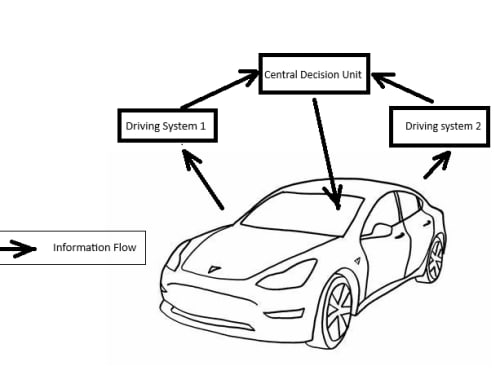
The idea is that multiple (at least two) independent automatic/autonomous/smart driving systems should be installed on a vehicle. When driving, each system produces independent driving instruction/command. The instructions are sent to the central decision unit. If all the instructions agree, the instruction gets executed. If not, a conflict resolving mechanism could be implemented to determine what to do.

PROBLEM:
Salt and other chemicals rust undercarriage components. Car-bottom rust is dangerous and expensive. The undercarriage is vulnerable to damage due to lack of care. Salt and mud damage is a safety issue -- many undercarriage components cannot be rustproofed. The greatest need for non-collision car repair results from preventable undercarriage rust.
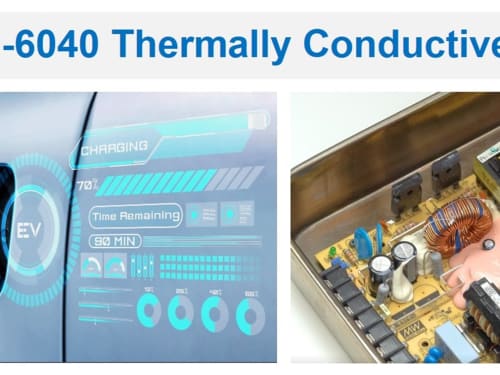
DOWSILTM TC-6040 is developed as 2-part thermal encapsulant with highest thermal conductivity 4W/mK to boost thermal dissipation in EV powertrain, which has been commercialized and formally launched in 2024.
With the fast-growing market of EV globally, the power electronics are rising focus on higher power energy design due to required faster charging and higher energy battery.

Project Overview: NATIONWIDE TRANSIT SERVICE (NTS)
The NTS is a proposed high-speed, nationwide, privately funded transportation system that leverages autonomous electric vehicles powered by solar energy. This transformative concept aims to decarbonize transportation while offering a safer, faster, and more accessible alternative to traditional travel methods. Imagine traveling from Manhattan, NY, to Boston, MA,

Surround Safety Laboratories Inc. (SSL) is developing a step-wise improvement in vehicle occupant crash protection. The SSL solution is a “universal” seat-integrated, surrounding airbag which provides protection in conventional and unconventional seating orientations (rotated, reclined, and lying positions), when impacted in all directions.
The foundational idea is patent protected and exclusively licensed to SSL. Further,

This is a proposal to reduce air drag for cars and trucks which is the primary reason for cars' poor gas mileage. Even though cars are streamlined, the frontal area (height x width, ≈ 20 sq. ft.), pushes the air and uses more fuel to overcome. The proposal is to draw air in at the front,

Overview
This pioneering passenger car integrates a hydrogen-powered internal combustion engine (H2-ICE) with a mechanical kinetic energy recovery system (KERS), delivering a sustainable alternative to battery-electric vehicles (BEVs). The design addresses BEV limitations, including resource-intensive battery production, grid decarbonization dependency, and the environmental toll of frequent vehicle replacement.
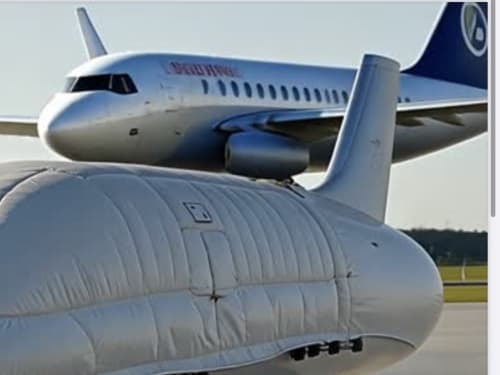
The HWDS is an innovative, autonomous ground-based (and future airborne) system designed to assist aircraft during emergency landings caused by landing gear failure. This mobile unit features a hydraulic wheel platform equipped with advanced cushioning—combining inflatable airbag-like structures and non-Newtonian materials—for shock absorption upon contact. Integrated robotic arms securely attach to the fuselage or gear assembly,

The idea is to have pipelines running along the chassis of a vehicles. One end of the pipeline is connected to the drain holes of the engine, etc. The other end of the pipeline is attached to valves. The valves and the outlets of the pipelines are located along the perimeter of the vehicles. By doing so,
Page 8 of 10