2025
Entries

What is the the RDI Onyx and why is it worth your time? The RDI Onyx is a detector that will be used for quality assurance testing in proton therapy.
It is important because it acheives these goals: improving quality of life, preventing or reducing injuries, saving lives, saving time and money, improving productivity.

Project Overview: NATIONWIDE TRANSIT SERVICE (NTS)
The NTS is a proposed high-speed, nationwide, privately funded transportation system that leverages autonomous electric vehicles powered by solar energy. This transformative concept aims to decarbonize transportation while offering a safer, faster, and more accessible alternative to traditional travel methods. Imagine traveling from Manhattan, NY, to Boston, MA,
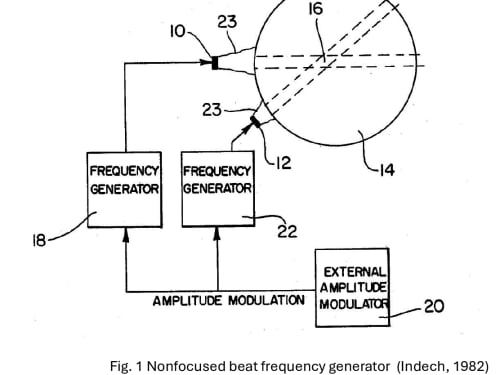
Transcutaneous magneto acoustic stimulation is the application of an ultrasonic beam from outside the skull impinging on brain structures inside the skull, where a transverse magnetic field is externally applied. By using charged ion movement in a magnetic field, stimulation by electronic impulse (due to the magnetic field) is 500x more effective than mechanical nerve stimulation alone.

Overview
This pioneering passenger car integrates a hydrogen-powered internal combustion engine (H2-ICE) with a mechanical kinetic energy recovery system (KERS), delivering a sustainable alternative to battery-electric vehicles (BEVs). The design addresses BEV limitations, including resource-intensive battery production, grid decarbonization dependency, and the environmental toll of frequent vehicle replacement.
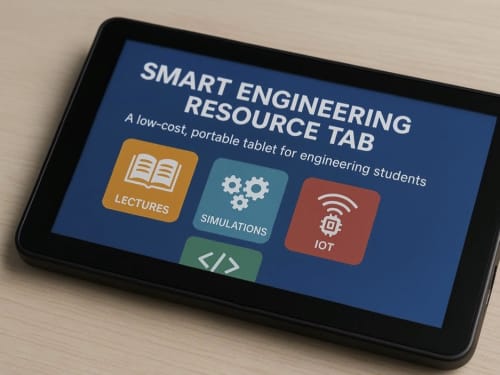
The Smart Engineering Resource Tab is an innovative, low-cost tablet designed to empower engineering students with an all-in-one hub for learning, prototyping, and collaboration. Tailored for electronics, mechanical, and other disciplines, this portable device integrates preloaded resources, simulation tools, and IoT connectivity to streamline academic and project work, making STEM education accessible globally,

Surround Safety Laboratories Inc. (SSL) is developing a step-wise improvement in vehicle occupant crash protection. The SSL solution is a “universal” seat-integrated, surrounding airbag which provides protection in conventional and unconventional seating orientations (rotated, reclined, and lying positions), when impacted in all directions.
The foundational idea is patent protected and exclusively licensed to SSL. Further,

The idea is to have pipelines running along the chassis of a vehicles. One end of the pipeline is connected to the drain holes of the engine, etc. The other end of the pipeline is attached to valves. The valves and the outlets of the pipelines are located along the perimeter of the vehicles. By doing so,

The transition from intercalation-type anodes to metallic anodes represents a significant paradigm shift in energy storage technology. The energy density of alkali metal batteries to withstand repeated charge and discharge cycles depends on the efficiency of metal deposition and stripping.

This is a proposal to reduce air drag for cars and trucks which is the primary reason for cars' poor gas mileage. Even though cars are streamlined, the frontal area (height x width, ≈ 20 sq. ft.), pushes the air and uses more fuel to overcome. The proposal is to draw air in at the front,

Project: "OptoVEE"
The Design and Engineering of a more efficient configuration for solar panel installations.
Project Overview
The Project proposes to utilize a "V" configuration mounting system to attach solar panels. By implementing reflective panels on both sides of the "V", in conjunction with each solar panel,
Page 40 of 44