2025
Entries

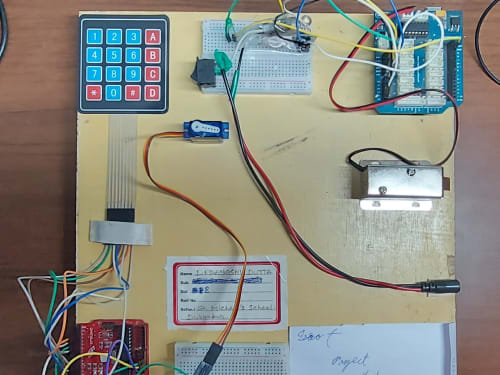
Project Locker has two parts, the first part leads the way two the second part.

The idea is to have an car seat similar to infant safety seat mounted facing the back of the vehicle with full seat belt (cross both shoulders and legs). This would insure maximum safety for sleeping in a running vehicle. Conceivably,

The Robotics Integration System is a revolutionizing tool that will address the major concerns of integration and interoperability in robotics and automation. By creating chances for collaboration and productivity and stimulating sustainable methods of working,

The idea is to have magnets attached to the tire frames and metal (copper) wiring running though the axles. When driving, the electricity is generated from the spinning tires and sent to the battery. By doing so, the car battery is continuously charged while the car is running and significantly longer driving distance can be achieved.

It uses a nano-optoelectronic sensor that detects, in parts per trillion, the volatile organic compounds that are the biomarkers of a disease. In 3 seconds or less, at a cost of $1 or less,

A personal flying vehicle without wings would greatly diminish the need for ground travel. Lifting, flight, and landing power could be supplied with multiple blades that circle the body of the craft between the outer perimeter and an enclosing cover. The angle of these blades could be continuously adjusted to accomplish changes in craft movement.
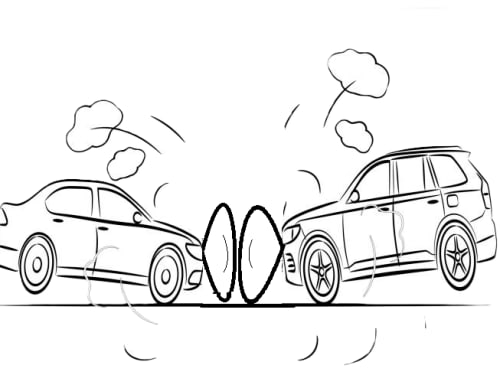
Currently, all airbags on a vehicle are installed inside the vehicle to protect the occupants when collision happens. The idea is to have airbags mounted on/close to the outer surface of the vehicle. When auto/smart driving system detects a collision is imminent,
Overview
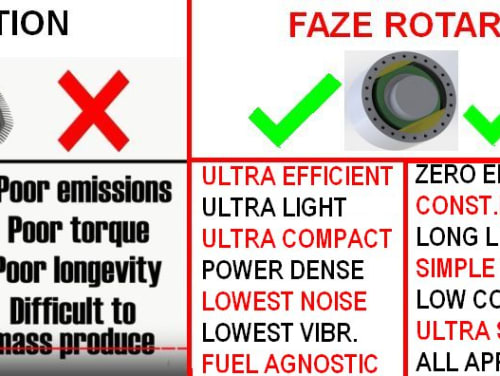
NFTG is developing a simple, low cost, ultra-quiet, personal air vehicle, capable of rapid door-to-door mobility without requiring any operator license. [See my PersonalJet© submission]
It will be powered by one of our simple, low cost, maximally-efficient, zero-pollution rotary engine.
Background
Current modes of transportation are slow, tedious and costly, using failing infrastructures.

Children with Type 1 diabetes need to constantly measure throughout the day and they often face challenges in monitoring their blood sugar levels. Current monitoring devices on the market usually contain single-use components. This both causes a high amount of waste and increases the cost for users. In terms of suitability for children,
Page 43 of 44