2023
Sustainable Technology

This project aims to improve the global environmental situation by using renewable energy sources to reduce greenhouse gas emissions. The "Green Spiral" technology efficiently converts fresh KPC manure through anaerobic fermentation, producing high quantities of effective Fermented Organic Biofertilizers and Biomethane rich in microorganisms. These Biofertilizers enhance soil mineral composition and balance,


The industrial use of enzymes for chemical production currently represents a 100 billion USD industry. A major application of enzyme catalysis is enantioselective synthesis in the pharmaceutical sector, with two-thirds of commercial chiral products involving enzyme catalysis.
Create a returnable plastics lottery system where reverse vending machines are used as "slot machines" and where any (authorized) plastic item could be deposited and where only very occasionally would the depositor win a (relatively) large dollar amount prize.

[IOT based] AN AUTO-ELECTRIC TOOL MACHINE FOR
SET-ABLE SURFACE-MATERIAL CUTTING / CARVING & STITCHING
leather, plastic / canvas etc material
* PRODUCT MODIFICATION: of the LEATHER CUTTER TOOL to the best.
* Tagline: perfect your material to the best

Energy Source:
"Even if only 1% of the thermal energy contained within the uppermost 10 kilometers of our planet could be tapped, this amount would be 500 times that contained in all oil and gas resources of the world."
-U.S.

The Ina Vibe Project is a eco-friendly clean cooking, charging, and lighting solution designed to address the energy poverty that has led to unsustainable and unhealthy cooking and lighting practices in Nigeria. With over 90 million Nigerians lacking access to grid electricity and over 180 million Nigerians lacking access to clean-cooking products,
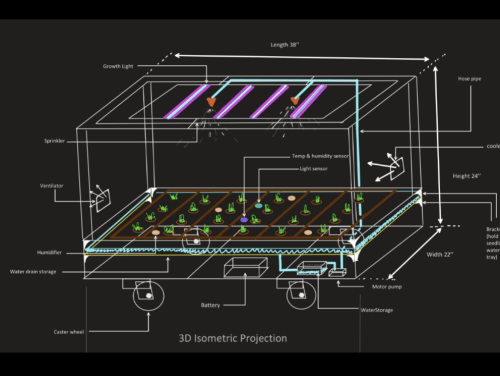
The IoT-based Plant Weaning System is an innovative solution designed to optimize plant care processes, specifically addressing the crucial phase of plant weaning. This system leverages the capabilities of the Internet of Things (IoT) to enhance efficiency, precision, and automation in plant cultivation. By integrating sensor technologies, data analysis algorithms, and automated control mechanisms,
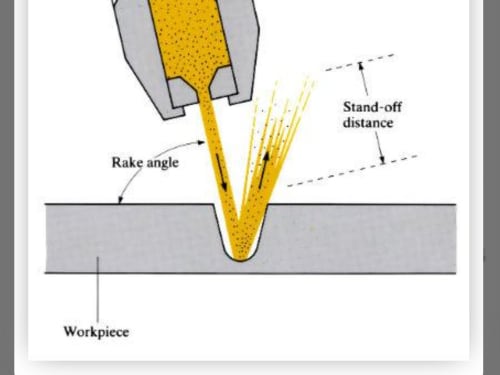
This project is about utilization of new approach for demolition that does not destroy bricks so that they can be usable without going any process after the demolition process to build new buildings or housings by utilization of water jet cutting machine to separate the cement that connect each brick together to form a wall.

Microbial fuel cells (MFCs) are technologies that turn the chemical energy found in organic materials into electrical energy by using microorganisms. They are under the category of bio-electrochemical systems (BES), which are capable of producing power from a variety of organic wastes, including wastewater, agricultural waste, and even human faeces.
An anode (the electrode where oxidation takes place),
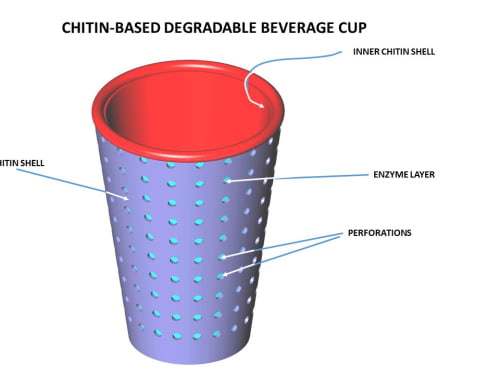
The cup is made of chitin and contains compartments containing chitin-degrading enzymes ('chitanases').
Enzyme compartments have small openings to the outside of the cup.
Enzymes are initially in a dried (‘lyophilized’) state and are inactive.
Upon exposure to water in the environment (such as a landfill), the water enters enzyme compartments, reconstuting and re-activating the enzymes.
Page 7 of 11