Congratulations to Our 2025 Grand Prize and First Place Winners!
Imersiv, a breakthrough technology that improves audio performance by 100X compared to today’s very best audio equipment for applications ranging from sound engineering to space missions to medical imaging, was named the $25,000 grand prize winner at a live finalist round held November 7 in New York. Click here for the full list of winners. Also see the Top 100 highest scoring entries. Special thanks to our esteemed panel of judges.
Help build a better tomorrow
Since Tech Briefs magazine launched the Create the Future Design contest in 2002 to recognize and reward engineering innovation, over 16,000 design ideas have been submitted by engineers, students, and entrepreneurs in more than 100 countries. Join the innovators who dared to dream big by entering your ideas in our 2026 contest opening March 1.
Read About All the 2024 Winning Inventions
Special Report spotlights the eight amazing winners in 2024 as well as honorable mentions in each category, plus the top ten most popular entries as voted by our community.
Click here to read moreA ‘Create the Future’ Winner Featured on ‘Here’s an Idea’
Spinal cord injury affects 17,000 Americans and 700,000 people worldwide each year. A research team at NeuroPair, Inc. won the Grand Prize in the 2023 Create the Future Design Contest for a revolutionary approach to spinal cord repair. In this Here’s an Idea podcast episode, Dr. Johannes Dapprich, NeuroPair’s CEO and founder, discusses their groundbreaking approach that addresses a critical need in the medical field, offering a fast and minimally invasive solution to a long-standing problem.
Listen nowThank you from our Sponsors
“At COMSOL, we are very excited to recognize innovators and their important work this year. We are grateful for the opportunity to support the Create the Future Design Contest, which is an excellent platform for designers to showcase their ideas and products in front of a worldwide audience. Best of luck to all participants!”
— Bernt Nilsson, Senior Vice President of Marketing, COMSOL, Inc.
“From our beginnings, Mouser has supported engineers, innovators and students. We are proud of our longstanding support for the Create the Future Design Contest and the many innovations it has inspired.”
— Kevin Hess, Senior Vice President of Marketing, Mouser Electronics
contest
Contest

The "Displacement Safety System" (DSS) is designed for use in commercial Electric Vehicle Charging Stations, to mitigate electrification hazards caused by man-made catastrophic events such as collision and vandalism, and natural catastrophic events such as earthquakes, hurricanes, tornados, & flooding. The system will automatically terminate the main power feed powering the charging station,


<Motivation and Innovation>
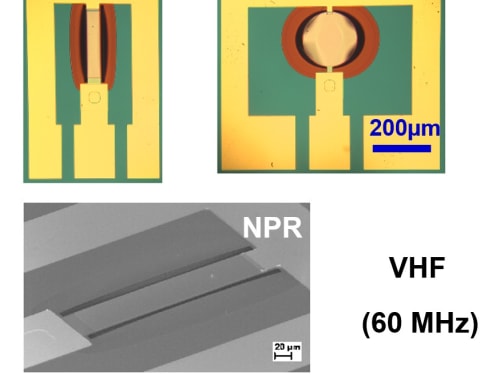
Antenna miniaturization has been one of the fundamental challenges for decades. Conventional small antennas use electric current for radiation which relies on electromagnetic wave resonance that leads to antenna sizes comparable to the electromagnetic wavelength. Here we demonstrated a new antenna miniaturization mechanism, acoustically actuated nanomechanical magnetoelectric (ME) antennas,

This proposal relates generally to radiolocation sphere, and particularly to monopulse direction finding systems. It can be used to increase guidance accuracy, for example, of unmanned aerial vehicles to targets such as: aerial (sea and/or ground-based) vehicles reflecting the radio signal that illuminates them; some devices radiating radio signals and jamming signals; radio beacons.
How it works.

Identification and Significance of the Innovation
Anomalous propulsion effects where there should be none were observed as alternate thrusts in tests of a self-contained so-called RAMA device, developed at Instituto Universitario Aeronáutico (Argentina). This device, involving ring shaped high-K ceramic capacitors with wrapped around toroid coils, generates crossed time harmonic electromagnetic (EM) fields in phase quadrature.
Drop bags are for low-level airdrops beneath radar. These are a combination of safety bag and gas propelled retro rockets. Use is primarily for clandestine missions and as safety bags for rotary wing aircraft where parachutes cannot be operated.
The airbags are made from a very durable, soft Dyneema UD-SB.
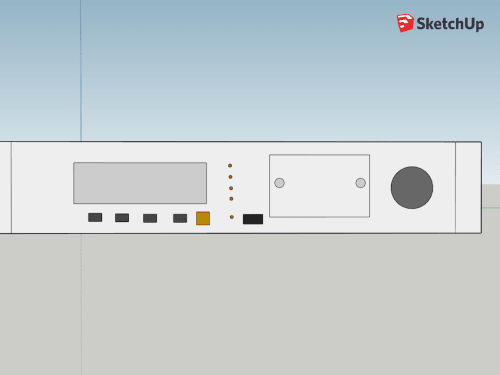
EAS device full absolute time same code structure that uses a true full absolute time protocol. This improvement will better guarantee absolute time from year to year as well as preventing bad BLU or WTE BLA CEA alerts.The solution is simple. Others have proposed similar ideas but my idea does more with elegant simplicity.
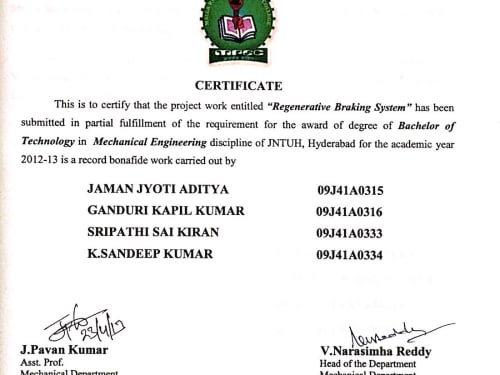
A regenerative braking system is a system in which the power is generated through friction energy while applying brakes which otherwise would be lost to the environment. In this system, an electric motor that normally drives a hybrid or pure electric vehicle is essentially operated in reverse (electrically) during braking or coasting.
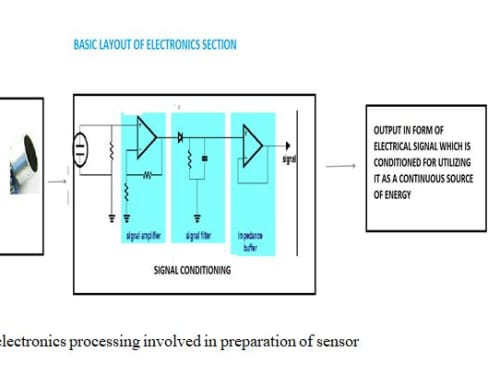
Road transportation, as an important requirement of modern society, is presently hindered by restrictions in emission legislations as well as the availability of petroleum fuels, and as a consequence, the fuel cost. Wasted heat is one of the most abundant and widely available energy sources in our living environment and industrial activities. When the tires move across the surface,
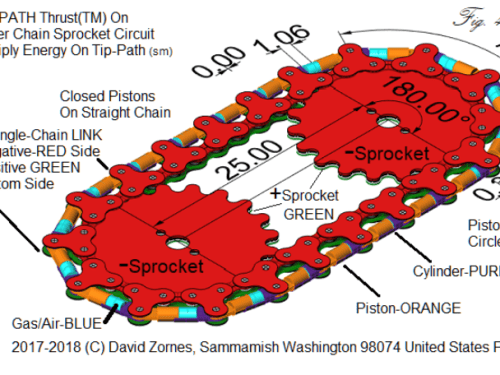
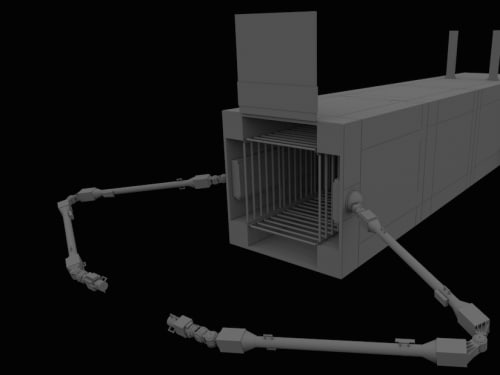
The extraordinary capabilities of the GSAL is our method of creating large structures in space very fast. The Gateway Segment Assembly Line or GSAL will be amazing in many ways and the first is speed. From the time materials are first loaded, until a simple, but large frame over 200 feet long is constructed is under 30 minutes.
Page 346 of 1029