Congratulations to Our 2025 Grand Prize and First Place Winners!
Imersiv, a breakthrough technology that improves audio performance by 100X compared to today’s very best audio equipment for applications ranging from sound engineering to space missions to medical imaging, was named the $25,000 grand prize winner at a live finalist round held November 7 in New York. Click here for the full list of winners. Also see the Top 100 highest scoring entries. Special thanks to our esteemed panel of judges.
Help build a better tomorrow
Since Tech Briefs magazine launched the Create the Future Design contest in 2002 to recognize and reward engineering innovation, over 16,000 design ideas have been submitted by engineers, students, and entrepreneurs in more than 100 countries. Join the innovators who dared to dream big by entering your ideas in our 2026 contest opening March 1.
Read About All the 2024 Winning Inventions
Special Report spotlights the eight amazing winners in 2024 as well as honorable mentions in each category, plus the top ten most popular entries as voted by our community.
Click here to read moreA ‘Create the Future’ Winner Featured on ‘Here’s an Idea’
Spinal cord injury affects 17,000 Americans and 700,000 people worldwide each year. A research team at NeuroPair, Inc. won the Grand Prize in the 2023 Create the Future Design Contest for a revolutionary approach to spinal cord repair. In this Here’s an Idea podcast episode, Dr. Johannes Dapprich, NeuroPair’s CEO and founder, discusses their groundbreaking approach that addresses a critical need in the medical field, offering a fast and minimally invasive solution to a long-standing problem.
Listen nowThank you from our Sponsors
“At COMSOL, we are very excited to recognize innovators and their important work this year. We are grateful for the opportunity to support the Create the Future Design Contest, which is an excellent platform for designers to showcase their ideas and products in front of a worldwide audience. Best of luck to all participants!”
— Bernt Nilsson, Senior Vice President of Marketing, COMSOL, Inc.
“From our beginnings, Mouser has supported engineers, innovators and students. We are proud of our longstanding support for the Create the Future Design Contest and the many innovations it has inspired.”
— Kevin Hess, Senior Vice President of Marketing, Mouser Electronics
contest
Contest

Safety in small aircraft has been an issue since the beginning of flight, especially for lightweight engine powered personal airplanes also known as ultralight/microlight aircrafts. Currently these ultralights are rapidly transforming into high performance aircraft for recreational use with a very respectable speed and range. Electric powered ultralights have started to replace gasoline engines for these small aircraft,

My idea is restructuring liquid crystals to have controllable photovoltaic properties. This can cause desirable effects, and could also make photovoltaics much more practical for household use. The panels are designed to exhibit photovoltaic properties when a small voltage is applied from a separate power source, darkening the glass, while also causing the structure to exhibit photovoltaics.

A major environmental issue today concerns the effects of automobile pollution and efficiency. Recycling lost energy, increasing fuel economy, and protecting air quality are areas in which a vehicle could be improved. Engine combustion of gasoline creates excess heat energy which the radiator disperses into the atmosphere.
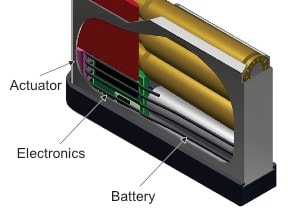
Active firearm safeties have not became a reality because of a limitation in technology. The ability to transmit signals a short distance can be done with IR, RF, sonic and visible light even in a very small size. So an authentication key, ring, badge,
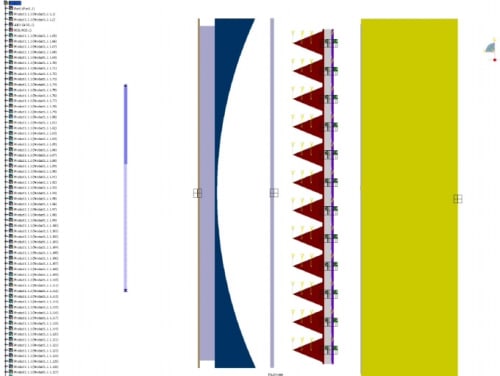
The device functions on the principles of quantum physics and wave destructive interference. It creates a counter shock wave through the use of sensors, reactive armor, and composite armor. We know from physics that a vector is a force with a magnitude and direction.
When a mine or IED explodes beneath the vehicle,

Original Concept by Dr. Kuang Y. Wu
Art and Design by Kimberly Tsai
After the wake of the tsunami and hurricane natural disasters, my uncle Kuang Wu presented to me an idea to help save lives in such situations. His idea was using a perfect sphere to protect people from danger and help save lives. After several designs and concepts,

Food is one of the basic needs for human beings. In this modern society, food cooking is carried out using electric power or natural gas. However, rural communities without access to electric power or natural gas in some developing countries are still using traditional way to prepare foods, namely firewood. While the world is struggling with global climate change,
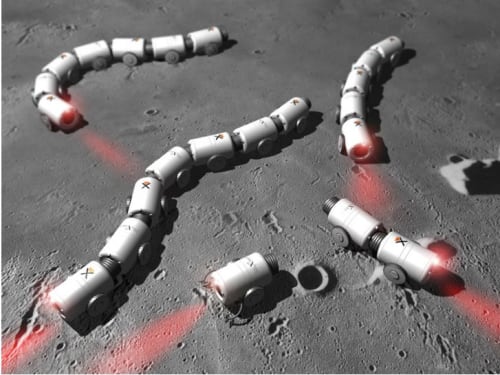
Because our aim is to win the Google Lunar X-Prize (GLXP) in the most commercial and sustainable manner, our design has many practical applications. We are developing an inexpensive yet durable robotic platform, whose resistance to the much harsher conditions of the moon will enable it to be used anywhere on Earth.
Similar to Mars Exploration Rovers,

DCD stands for Dynamic Cylinder Deactivation, the latest fuel saving technology for internal combustion engines. Traditional cylinder deactivation started in the 1970s, and has been verified and proven over 30 years. But it has never been made into an aftermarket retrofitting product until now.
DCD deactivates all the cylinders inside the engine alternatively,

The proposal is the teamwork of Mr. Wayne D. Pickette and Ms. Anna V. Epelbaum with already pending in the US Patent Office since 2008 Flying Dynamo patent application # 11936761.
This style small vane vertical windmill with an internal sail and infinite vane adjustment is presented by three sets of vanes,
Page 892 of 1029